
Homeowners rely on their roofs every day, yet many don’t fully understand the different components that make up a roofing system. Knowing how these elements work together can help you spot early signs of damage, communicate more effectively with contractors, and make informed decisions about repairs or replacements. Whether you’re scheduling routine maintenance or calling a local roof repair service, understanding key roofing components empowers you to better care for your home.
Below is a detailed guide to the roofing components every homeowner should know.
Shingles
Shingles are the most visible part of your roofing system, serving as your first line of defense against sun, rain, wind, and snow. Asphalt shingles are the most common, but other options include metal, tile, cedar shake, and slate.
Shingles protect your home by:
-
Shedding water
-
Blocking UV rays
-
Providing wind resistance
-
Adding curb appeal
Damaged or missing shingles often indicate the need for a roof inspection. A local roof repair service can replace them before leaks or structural issues develop.
Underlayment
Beneath the shingles lies the underlayment—a protective barrier typically made of felt or synthetic material. The underlayment provides additional waterproofing and acts as a safety net if shingles are damaged or displaced.
Its primary functions include:
-
Preventing moisture infiltration
-
Protecting roof decking
-
Improving shingle performance
-
Offering temporary protection during installation
A compromised underlayment increases the risk of leaks, making repair or replacement essential.
Roof Decking (Sheathing)
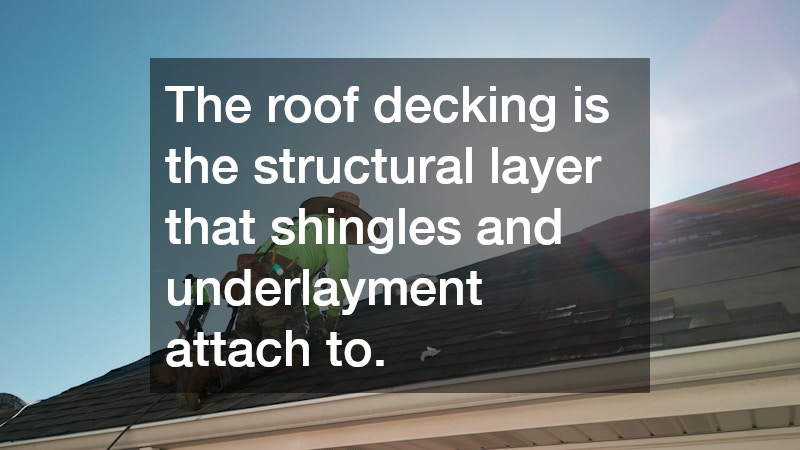
The roof decking is the structural layer that shingles and underlayment attach to. Usually made from plywood or oriented strand board (OSB), decking forms the foundation of the roofing system.
Decking must remain strong and dry. Common signs of damaged decking include:
-
Sagging roof surfaces
-
Soft spots
-
Water stains in the attic
-
Visible rot or mold
If decking deteriorates, it becomes unsafe and must be replaced by a professional roofing contractor.
Flashing
Flashing is the thin metal material (often aluminum or galvanized steel) used around vulnerable roof areas such as chimneys, skylights, vents, and valleys. Flashing prevents water from entering cracks, seams, or joints where shingles can’t fully seal.
Proper flashing installation is essential because many leaks start in these areas. A local roof repair service can inspect and replace damaged flashing to ensure your roof remains watertight.
Drip Edge
A drip edge is a metal strip installed along the edges of the roof. Its purpose is to guide water away from the fascia and into the gutters, preventing water damage to the roof’s edge.
Benefits include:
-
Protecting the roof deck from moisture
-
Reducing risk of ice dams
-
Enhancing shingle stability
-
Improving overall drainage
Without a drip edge, water may pool or seep into structural areas.
Fascia
Fascia is the horizontal board that runs along the roofline and supports the bottom edge of the shingles. It also holds the gutters in place. Fascia must stay strong, as it plays a major role in roof integrity and drainage performance.
Signs of fascia problems include:
-
Rotting or warping
-
Peeling paint
-
Gutter detachment
-
Water stains
A damaged fascia board can allow water intrusion or gutter instability, requiring prompt professional repair.
Soffit
Soffits are the panels located beneath the roof’s overhang. Although often overlooked, they are essential for proper attic ventilation, allowing fresh air to enter the attic while preventing pests from getting inside.
Good ventilation regulated by soffits:
-
Reduces moisture buildup
-
Helps prevent mold
-
Improves energy efficiency
-
Extends roof lifespan
If soffits become blocked or damaged, attic temperatures and humidity levels can rise, harming the roof from the inside out.
Ridge Vent and Ventilation System
Roof ventilation is critical to preventing heat and moisture buildup in the attic. Most roofs include ridge vents installed along the peak of the roof, allowing hot air to escape.
Other ventilation components may include:
-
Soffit vents
-
Gable vents
-
Roof box vents
-
Attic fans
Proper ventilation:
-
Extends shingle life
-
Reduces cooling costs
-
Prevents ice dams
-
Minimizes mold growth
If your home experiences high attic temperatures or musty odors, a local roof repair service can assess whether your ventilation system needs improvements.
Gutters and Downspouts
Although not technically part of the roof itself, gutters and downspouts are vital to the roofing system because they manage water runoff. Without effective drainage, water can back up under shingles, damage fascia, or flood the foundation.
Gutters should be inspected regularly for:
-
Clogs
-
Leaks
-
Sagging
-
Improper pitch
Properly functioning gutters help prolong the life of the entire roofing structure.
Roof Valleys
Roof valleys are the areas where two roof slopes meet. Because they channel large amounts of water during rainfall, they are highly vulnerable to leaks.
Valley protection often includes:
-
Special valley shingles
-
Metal flashing
-
Additional underlayment layers
Wear or improper installation can cause leaks, making valleys a common focus for roof inspections.
Chimney and Skylight Components
Chimneys and skylights require specialized waterproofing materials such as step flashing, counter flashing, and rubber seals. Because these structures penetrate the roof, they are common leak points if not maintained properly.
A local roof repair service can reseal or replace these elements to keep your home protected.
Ice and Water Shield
This waterproof membrane is often applied to roof edges, valleys, and other vulnerable areas. It provides extra protection against wind-driven rain and ice dam formation.
It acts as:
-
A secondary moisture barrier
-
A reinforcement for leak-prone areas
-
A defense during extreme weather
Homes in cold climates particularly benefit from this component.
Understanding your roof’s key components helps you recognize problems early and communicate more confidently with roofing professionals. Each part—from shingles and flashing to ventilation systems and gutters—plays a vital role in protecting your home from the elements. If you suspect issues with any of these components, contacting a local roof repair service ensures timely, expert support and long-lasting protection for your home.