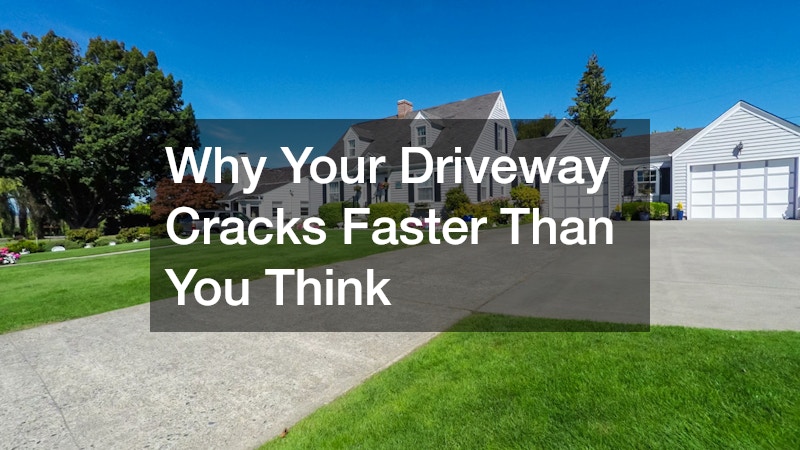

A brand-new driveway looks like it should last forever, yet within a year or two many homeowners notice hairline cracks spreading across the surface. Those cracks are not a sign of bad luck or bad materials most of the time. They are usually the predictable result of soil movement, water, temperature swings, and simple age that every driveway faces. Understanding what actually causes cracking can help you catch problems early, budget for the right fixes, and avoid paying for a full replacement years before you should.
Soil Movement Underneath the Slab
Every driveway sits on a base of compacted soil, and that soil is constantly expanding and contracting with moisture and temperature changes. When the ground swells after heavy rain or shrinks during a dry spell, the concrete or asphalt above it has no choice but to flex along with it. Over time, this constant movement creates stress fractures that start small and widen with each passing season.
Poor soil compaction during the original installation is one of the most common hidden causes of early cracking. If a contractor rushed the base preparation or skipped proper grading, the driveway was set up to fail from day one. This is why understanding the installation process matters just as much as choosing a material, similar to how careful planning matters before a fence installation so the posts do not shift in loose ground.
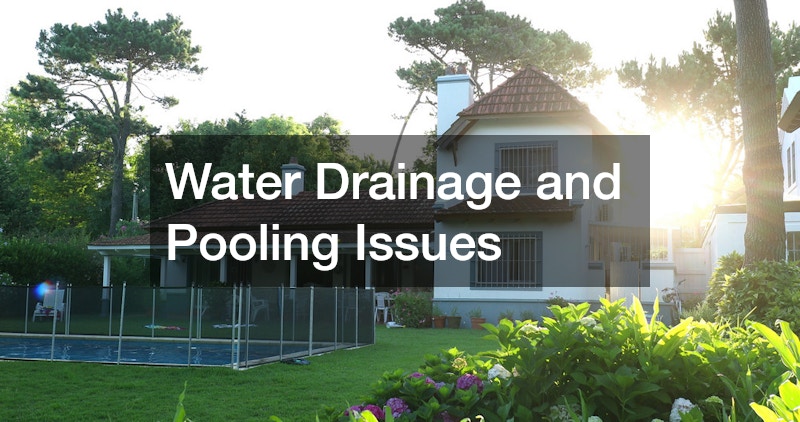
Water Drainage and Pooling Issues
Water is one of the most destructive forces a driveway will ever face, especially when it has nowhere to go. If your yard slopes toward the driveway instead of away from it, rainwater pools on the surface and seeps into tiny pores and cracks. A proper grade should slope away from your home and driveway at about a 1-2% grade, or roughly a quarter-inch drop per foot, just enough to keep water moving without creating a hazard.
Once that water freezes in colder climates, it expands by about 9%, turning a hairline crack into a much larger structural problem. This freeze-thaw cycle can repeat dozens of times each winter, and every cycle widens the crack a little more, until chunks of asphalt or concrete start to break away entirely.
Standing water causes damage even without freezing temperatures. Puddles that linger for hours soften the base material beneath asphalt driveways, while constant moisture can lead to efflorescence, spalling, or discoloration on concrete. Look for telltale signs like birdbath-sized puddles after a storm, soggy patches near the edges, or moss and algae growth, all of which point to poor drainage that needs correcting before it does lasting damage.
Keeping an eye on your drainage system through a routine roof inspection can help you spot misdirected downspouts before they undermine your driveway or foundation. A qualified inspector can also check for clogged gutters, sagging sections, or extensions that have shifted out of place after storms, and can flag whether a roof repair is needed to stop water from being funneled toward the pavement. Simple fixes like adding downspout extensions, splash blocks, or regrading a low spot are inexpensive compared to repairing a driveway that’s already heaved or crumbled.
Freeze Thaw Cycles in Cold Climates
In regions that see freezing winters, the freeze thaw cycle is one of the single biggest contributors to driveway cracking. Water that has seeped into small surface cracks freezes overnight, expands by about nine percent, and forces the crack wider. During the day, the ice melts and the cycle repeats, sometimes dozens of times in a single season.
- Concrete is especially vulnerable because it is porous and absorbs moisture easily
- Asphalt has more flexibility but can still crack under repeated freeze thaw stress
- Cracks that appear in early spring often trace back to winter freeze cycles
- Sealing the surface before winter reduces how much water can penetrate
Tree Roots and Nearby Landscaping
Trees planted too close to a driveway can cause slow, steady damage that takes years to become obvious. As roots grow outward searching for water, they push against the base beneath the pavement and eventually lift or crack the surface from below. This kind of damage is often mistaken for settling when the real cause is biological, not structural.
The species matters as much as the distance. Fast-growing, thirsty trees like willows, poplars, and silver maples send roots outward far beyond their canopy—sometimes two to three times the height of the tree—in search of moisture, making them notorious for driveway damage. Oaks and pines tend to grow deeper root systems and cause less surface disruption, though even they can be a problem if planted within a few feet of pavement.
As a general rule, trees should be planted at least 10 feet from a driveway, and larger species may need 20 feet or more to keep roots from interfering with the base. Once roots do reach the pavement, the damage often shows up as raised seams, hairline cracks that follow a curved path, or sections that rock slightly underfoot.
Nearby landscaping beds and irrigation systems can compound the problem. Frequent watering near the driveway’s edge encourages roots to grow toward that moisture rather than away from it, accelerating the very damage homeowners are trying to avoid by watering their plants carefully.
Homeowners sometimes do not realize how far roots travel until they see cracks appear on the opposite side of a tree from where it was planted. Root systems can extend two to three times the height of the tree, so even landscaping installed years after the driveway was poured can eventually cause new stress points. A 30-foot maple, for instance, may send roots 60 to 90 feet outward in search of water, easily reaching pavement that seemed safely distant at planting time.
Species matter as much as distance. Trees like willows, poplars, and silver maples are notorious for aggressive, shallow root systems that seek out moisture near the surface, while slower-growing options such as dogwoods, Japanese maples, or holly tend to stay more contained. Shrubs and hedges planted too close to the edge of the driveway can contribute as well, especially varieties with dense fibrous roots that gradually push against slab joints.
Soil moisture plays a role too. Roots naturally migrate toward the damp soil beneath and alongside a driveway, particularly during dry summer months when surrounding ground water is scarce. This makes concrete edges an attractive target, and the resulting pressure often shows up as lifting or hairline cracks long before a homeowner suspects tree roots are the cause.
Choosing slower-growing species, planting trees at least 10 to 20 feet from pavement, or installing root barriers near the driveway edge can prevent this problem before it starts. For established trees already close to the slab, root pruning by a certified arborist is sometimes a safer fix than removal, preserving the tree while relieving pressure on the concrete.

Heavy Loads and Vehicle Weight
Driveways are engineered for typical passenger vehicles, not for the repeated weight of moving trucks, dumpsters, or heavy equipment. When a moving company brings a large truck onto a residential driveway, the concentrated weight on a small surface area can stress the slab well beyond its design limits. This is especially risky if the driveway is still curing, since new concrete does not reach full strength for about a month after being poured.
Home renovation projects often introduce another culprit that is easy to overlook. Renting a dumpster rental for a remodel or cleanout puts hundreds of pounds of concentrated weight on one section of the driveway, sometimes for days or weeks at a time. Placing plywood or boards underneath the bin’s wheels or feet can help distribute that weight and reduce the chance of cracking.
Chemical Exposure From Everyday Products
Many common household chemicals are more damaging to driveway surfaces than people expect. Deicing salts, motor oil, gasoline, and even some pool chemicals can weaken the surface layer of concrete or asphalt over time, making it more prone to flaking and cracking. Calcium chloride and rock salt, in particular, create freeze-thaw stress by lowering the freezing point of water that has already seeped into tiny surface pores, so the moisture expands and contracts more aggressively than it normally would.
Motor oil and other automotive fluids cause a different kind of damage. Rather than triggering freeze-thaw stress, they break down the binding agents in asphalt and penetrate the porous surface of concrete, leaving soft spots that crumble under tire weight or foot traffic. Even a small, slow leak left unaddressed for a few months can create a noticeably weakened patch.
This is particularly true for pool owners, since chlorine and other chemicals tracked from a pool cleaner or splashed from nearby equipment can slowly degrade the surface if spills are not rinsed away. Chlorine tablets or granules that fall from a pool cleaner cart and sit on warm concrete can bleach and etch the surface within hours, especially in direct sunlight. Rinsing the area with water immediately after any chemical exposure, rather than waiting for the next rain, is one of the simplest ways to limit long-term damage.
- Rock salt and other ice melt products cause surface scaling by drawing moisture out of concrete pores, leading to flaking and pitting
- Calcium chloride melts ice faster but is harsher on concrete than plain sand or calcium magnesium acetate alternatives
- Motor oil and gasoline leaks break down asphalt binders, softening the surface until it crumbles under tire pressure
- Even small, repeated drips from an older car can weaken the same spot over months
- Fertilizer spills near driveway edges cause discoloration and weakening due to the salts and chemicals they contain
- Fertilizer runoff can also seep into hairline cracks and accelerate erosion from within
- Rinsing spills promptly with water limits how deep chemicals penetrate the surface
- Using a mild detergent and stiff brush on oil stains within 24 hours prevents long-term binder damage
- Sealcoating asphalt or applying a concrete sealer every few years adds a protective barrier against chemical absorption
Underground Utility Lines and Buried Systems
What is happening beneath your driveway can be just as important as what happens on top of it. Homes on private water systems sometimes have supply lines running near or under the driveway, and a failing well pump service call can reveal that a leak has been softening the soil below the pavement for months. Similarly, septic service technicians occasionally find that a settling tank or leach line near the driveway has caused the ground to shift unevenly.
If you notice a crack that appears suddenly along with soggy soil, unusual odors, or a sinking feeling when you walk certain areas, it is worth having buried utilities checked before assuming the crack is purely cosmetic. Digging or excavation for repairs can also disturb the base beneath a driveway if not backfilled and compacted correctly. Asking a technician to document how they restored the ground after utility work can save you from mystery cracks a year later.
Age Related Wear and Surface Fatigue
Even a perfectly installed driveway with ideal drainage will eventually show its age. Concrete typically lasts twenty five to thirty years while asphalt often needs replacement or major resurfacing closer to the fifteen to twenty year mark. As materials age, they lose flexibility and become more brittle, which means everyday stresses that once caused no damage start to leave visible marks.
Regular maintenance can meaningfully extend a driveway’s lifespan even as it ages. Applying sealcoating every two to three years protects asphalt from UV rays, oxidation, and moisture penetration, all of which speed up brittleness. For concrete driveways, sealing joints and filling small cracks promptly prevents minor wear from turning into major structural failures.
Insurance and Liability Considerations
Many homeowners are surprised to learn that driveway damage is rarely covered by standard homeowners insurance unless it results from a specific named peril like a fallen tree. If a delivery truck or contractor’s vehicle causes cracking, your auto insurance company may become involved if the damage resulted from a covered vehicle incident, though coverage varies significantly by policy and situation. It is worth reviewing your policy details before assuming any driveway repair will be reimbursed.
Documenting driveway conditions with photos over time can also help if you ever need to file a claim or dispute liability with a contractor or delivery service. Keeping records of when cracks first appeared, along with any related incidents like heavy equipment deliveries, gives you a clearer timeline. This kind of documentation is especially useful if a dispute arises over who is responsible for repair costs.
Driveway cracks rarely come from a single cause, but rather from a combination of soil conditions, water exposure, temperature swings, and everyday wear that adds up over the years. The good news is that most of these factors are manageable once you know what to watch for and how to respond early. Taking a proactive approach to drainage, maintenance, and load management today can add years to your driveway’s life and save you from a costly replacement down the road.